




Description
The Atlas Copco 1616714693 is the OIS C146 service stage for oil-injected screw compressors. It is the complete compression element of the machine: the part that takes in ambient air and returns it at working pressure, and the part whose condition decides how much air the compressor produces for every kilowatt it draws. Atlas Copco builds the stage in Belgium and classifies it under rate group S3K, oil-injected screw element.
At 224 kg on dimensions of 80 x 48 x 42 cm, the 1616714693 sits in the middle of the oil-injected range, where one machine often carries the air demand of an entire production line. Each unit is serialized, so the stage that arrives on site is traced through the supply record and logged against the machine it is fitted to.
Product Overview
A service stage is the compression element supplied for a machine already in the field. It replaces the stage fitted on the production line, is built to the same geometry, and fitting one restores the free air delivery and the working pressure the compressor was designed for. For the 1616714693, that machine is an oil-injected screw compressor in the Atlas Copco industrial range.
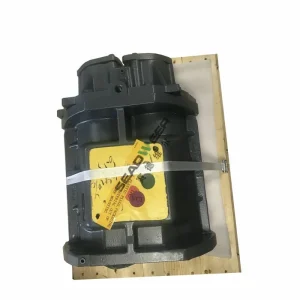
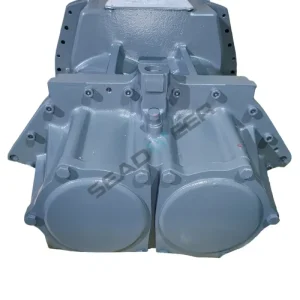
The 1616714693 is a substantial assembly: cast housing, matched rotor pair, bearing sets and shaft seals, delivered as one unit rather than as loose internals. That is what makes it a service stage. The wear-carrying parts are renewed together, the rotor geometry returns to specification, and the machine is reassembled around a component whose internal condition is new.
Machines in this class feed production lines, workshops and site utilities where compressed air stops being a background service and becomes a production input. When the stage in such a machine loses part of its output, the loss is paid every running hour, in energy first and in output second. That is what makes the condition of the fitted 1616714693 a production variable rather than a maintenance detail.

Technical Specifications
The tables below record the identification data for the 1616714693, followed by the dimensions and weight used for lifting and installation planning.
Part Identification
| Parameter | Value |
|---|---|
| Service part number | 1616714693 |
| Production part number | 1616714683 |
| Description | Service stage O.I.S. C146 |
| Configuration | C146 OIS M-05 |
| Rate group | S3K Oil injected screw, Element |
| Country of origin | Belgium |
| Tariff code | 8414900090 |
| Serialized | Yes |
| Sales unit | Piece |
Dimensions and Weight
| Parameter | Value |
|---|---|
| Length | 80 cm |
| Width | 48 cm |
| Height | 42 cm |
| Weight | 224 kg |

Part Numbers and the C146 Frame
1616714693 and 1616714683
Two numbers identify the same physical stage. The 1616714683 is the production number, carried by the stage built into a new machine at the factory. The 1616714693 is the service number, used when the same stage is supplied as a replacement part. They refer to one component with one fitment, and ordering by either number reaches the same genuine stage.
Both numbers are worth recording together in the machine file. A stage removed from a machine carries its production number, 1616714683, on the component itself; a parts list or a quotation carries the service number, 1616714693. The two numbers confirm each other, and an order raised against either one covers the same part.
What C146 and OIS mean
C146 is the frame designation in Atlas Copco’s oil-injected screw range. It groups the stages that share a rotor size class and a housing family, which is why parts documentation treats the C146 as a defined platform rather than a loose description.
OIS stands for oil-injected screw: the compression principle in which oil is injected into the chamber to seal, cool and lubricate while the rotors compress. M-05 completes the identification as the configuration of the C146 family that the 1616714693 belongs to. Read together, service stage O.I.S. C146 states exactly what the part is and where it sits in the parts system.

Why a Complete Stage
A worn stage presents a choice: renew the internals one item at a time, or replace the stage as a unit. Renewing internals means the housing is opened and each bearing and seal is replaced as a separate decision, and the result still depends on the condition of the parts that stay. The rotor geometry itself, where the running clearances live, is not renewed unless the rotors are reworked.
A complete service stage takes the other position: the 1616714693 arrives as one assembly with new rotors, new bearings, new seals and a housing machined to specification. The machine is opened once, the old stage comes out, the new one goes in, and the compression section returns to factory geometry in a single planned stop. For a machine whose output the site depends on, that single-step renewal is also the simpler one to schedule.

How the Stage Compresses Air
From intake to discharge
Air enters the 1616714693 through the inlet as the rotor lobes open and the interlobe spaces fill. As rotation continues, the meshing of the male and female rotors closes those spaces and the trapped volume shrinks toward the discharge end. The pressure rises with the shrinking volume, and the compressed air leaves through the discharge port at the pressure the machine is controlled to hold.
The rotors do not touch. Their profiles are cut so that a controlled clearance separates them along the whole seal line, and that clearance is where efficiency is won or lost. A stage with worn clearances leaks internally, delivers less air for the same input power, and passes the difference to the site as lost energy.
The oil circuit around the stage
Oil is injected into the chamber of the 1616714693 as compression proceeds, and it does three jobs in one pass. It seals the running clearances between rotors and housing, it carries away the heat of compression, and it lubricates the surfaces the air path itself cannot reach. The oil leaves the stage mixed with the compressed air and is separated, cooled and returned downstream, closing the loop.
Because the 1616714693 depends on that loop, the condition of the oil and the separator matters to a new stage as much as to an old one. Fresh oil, a clean separator and a clear oil circuit let the stage run as designed from the first hour.
Rotors, bearings and clearances
The rotor pair in the 1616714693 runs on bearing sets carried in the stage end covers, and those bearings take both the radial load and the axial forces that compression generates. The shaft seals keep the oil on the lubricated side of the housing and the air on the compression side. Bearings and seals are renewal items: they carry the wear that running hours produce, and together with the rotor clearances they define the mechanical life of the stage.

Handling a 224 kg Stage
The weight and footprint of the 1616714693 shape the installation plan. At 224 kg and 80 cm long, the stage is a machine-assisted, two-person-guided lift: a workshop hoist or crane takes the mass, and hands steady it. Plan the route before the unit arrives, from the unloading point to the compressor, and check that the floor along that route takes the load.
The 1616714693 arrives with port caps fitted and the serial plate in place. Keep the caps on until the stage is at the machine, because a knock on an open port is a knock on the rotor chamber. Set it down on timber or a bench, never on a shaft end, and leave the lifting gear attached until the mounting bolts take the weight.
At the machine, the work is alignment and clean assembly: seat the 1616714693 on its original mounting faces, line up the inlet and discharge connections, and torque the fasteners to the manual. New seals and gaskets go in with the new stage. The time invested in planning the lift is small next to the downtime saved when the swap itself runs to schedule.
Service Life and Replacement Indicators
A stage such as the 1616714693 wears gradually, and the change shows in operating data before it shows in a stoppage. Free air delivery falls against the same power input. Discharge temperature drifts upward as clearances leak and the oil carries more heat. Specific energy climbs: the machine pays more kilowatt-hours for the same air. Noise and vibration at the stage sharpen as bearing clearances grow.
None of these readings is a verdict on its own, because each one traces back to more than one component. Filters, separators, valves and control behavior all leave their signature in the same data. The sequence that works is to rule out the surrounding system first, then attribute the remaining loss to the stage on the strength of a teardown inspection and a clearance measurement by a qualified technician.
Where the machine is production-critical, the replacement of the 1616714693 is planned rather than reactive. The operating trend gives the maintenance window, the stage is ordered into that window, and the swap takes place on a planned stop with the lifting route ready. That converts a component failure into a scheduled task.
Ordering the Correct Stage
Two pieces of information lock the order for a 1616714693 down quickly: the part number and the machine it is going into. The number is read from the old stage, from the machine parts list, or from a previous quotation. The machine is identified by the model and serial number on the compressor nameplate.
Sent together, those two details let the parts desk confirm the 1616714693 against the machine in one pass, with no second round of questions. If the number on the old stage has worn away, the nameplate serial number points to the correct stage through the machine’s parts documentation, and the confirmation comes back the same way.
Keep the pairing on record after the swap: the service number, the production number it replaced, and the machine serial. The next service of the same machine then starts from a confirmed reference instead of a fresh search, and the ordering conversation is shorter every time.

FAQ
What does C146 mean on the 1616714693?
C146 is the frame designation in Atlas Copco’s oil-injected screw range, the platform this stage belongs to. Together with the OIS marking and the M-05 configuration, it places the 1616714693 precisely in the parts documentation.
Are 1616714693 and 1616714683 the same part?
Yes. The 1616714683 is the production number carried by the stage built into new machines, and the 1616714693 is the service number used for replacement supply. One component, one fitment, either number orders it.
The stage weighs 224 kg. What does that mean for installation?
Plan a machine-assisted lift: hoist or crane for the mass, hands to steady and position. Check the floor route from unloading to the compressor in advance, and keep the port caps on until the stage is at the machine. The dimensions, 80 x 48 x 42 cm, pass a standard workshop door and sit square on a normal bench.
How do I confirm the 1616714693 is correct for my machine?
Send the model and serial number from the compressor nameplate, together with the number read from the old stage where it is legible. The parts desk confirms the match against the machine documentation, and the confirmation comes back before the order is placed.
Which readings change when a compression stage wears?
Free air delivery falls for the same power input, discharge temperature drifts upward, specific energy consumption climbs, and noise or vibration at the stage sharpens. Each reading has other possible causes, so the surrounding system is ruled out first and the 1616714693 is confirmed by teardown inspection.
What does the serial number on the stage do?
Each 1616714693 is serialized, so the unit on site is tied to its supply record. Logged against the machine, the serial number makes the service history of that specific stage traceable from delivery to the day it is replaced.




Joseph Okonkwo –
We planned the stage swap into our annual shutdown and confirmed 1616714693 against the compressor nameplate before ordering. The unit arrived crated at 224 kg, and our workshop hoist took it straight from the pallet to the bench. The mounting faces lined up with the original positions, the port caps came off clean, and the compressor reached its normal pressure on the first run. We logged the serial number from the plate into the machine file, so the next service starts from a recorded number.