




Description
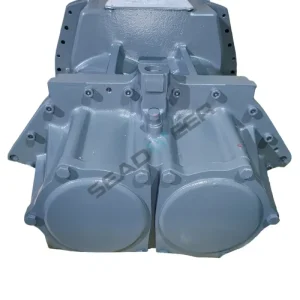
The 1616734582 is the C190 compression element for an Atlas Copco oil-injected screw compressor. It is the component that sets what the machine delivers: every other part of the compressor moves air, oil or power around the element, and the element is where the pressure is actually made. When this assembly reaches the end of its service life, the machine around it still runs — but the air it produces falls short of what the plant is drawing.
The element arrives as one complete assembly: housing, matched rotor pair, bearing sets and shaft seals, measuring 79 x 56 x 58 cm and weighing 400 kg. Renewing the 1616734582 as a single unit returns the rotor geometry, the bearing set and the sealing arrangement to the condition the machine was built with, and the compressor goes back to the free air delivery and working pressure its rating plate states.
The 1616734582 belongs to the oil-injected screw line, where the compression chamber runs wet with oil and the machine’s own circuit supplies it — the workhorse design of general industry. At 400 kg with a 79 x 56 x 58 cm footprint, the C190 is a unit whose renewal is a planned operation with lifting gear, not a quick swap between two shifts.
The sections below cover how the 1616734582 relates to the service stage its documentation points to, what the element does inside the machine, where wear shows first, and how a 400 kg renewal is planned and carried out.

The Element Number and the Service Stage Number
One Component, Two Numbers
Two numbers are attached to this component, and the parts documentation draws a clear line between them. The 1616734582 identifies the compression element itself — the part as it is recorded against the machine. The same documentation carries a standing instruction for service: orders for this element are placed against the service stage 1616734592, and that instruction decides which number appears on the order.
The logic behind the routing is straightforward. A compression element is not renewed as loose internals. The service stage delivers the complete assembly — rotors, bearings and seals renewed together, rotor geometry back to specification, the whole compression section new in one step. Ordering against 1616734592 therefore buys the component in its serviceable form, and the 1616734582 remains the reference that ties the order back to the machine’s own parts records.
How the Routing Works in Practice
That structure also protects the order itself. A renewal quoted against the 1616734582 and supplied through 1616734592 arrives with its identification settled from two directions: the machine’s records say which element is due, and the service documentation says which assembly fulfils it. Nothing in that chain depends on memory or on reading a worn plate twice.
Where each number turns up depends on where you look. The element records, the machine’s parts list and a previous quotation tend to carry the 1616734582. Service correspondence, quotations for renewal work and the supply paperwork carry 1616734592. A technician who reads the plate, a planner who reads the parts list and a buyer who reads the last quotation are all talking about the same component, and the two-number structure is what lets them do it without a single correction along the way. In practice the two numbers work together: an enquiry that quotes the 1616734582 from the machine records is understood immediately, the order is placed against 1616734592 without further identification work, and either number on an enquiry reaches the same component.

Technical Specifications
Part Identification
| Parameter | Value |
|---|---|
| Part number | 1616734582 |
| Service stage order number | 1616734592 |
| Description | Compression element |
| Air end family | C190 |
| Rate group | S3K Oil injected screw, Element |
| Element type | Oil-injected screw |
| Brand | Atlas Copco |
| Sales unit | PC |
| Serialized | Yes |
| Country of origin | BE |
| Tariff code | 8414900090 |
The C190 designation places the element in the Atlas Copco air end family naming, where the C-prefix series identifies the compression unit by family and size. Within that family the full part number is the reference that selects the exact element, and the two numbers above travel together through the documentation. For anyone holding a parts printout or an old quotation, the presence of the 1616734582 on that paperwork is what anchors the enquiry to this exact element and nothing else.
Dimensions and Weight
| Parameter | Value |
|---|---|
| Length | 79 cm |
| Width | 56 cm |
| Height | 58 cm |
| Weight | 400 kg |
At 400 kg, this is an element that no crew member moves by hand at any stage of the job. The weight shapes everything that follows in this article: the lifting gear, the route through the building, and the way the shutdown window is planned around the lift rather than left to the day itself.

What the Element Decides for the Machine
Compression Inside the C190
Air enters the housing as the male rotor’s lobes open the spaces between them, and the meshing female rotor closes those spaces as the pair turns. Each pocket of trapped air travels from the intake end toward discharge while the volume around it shrinks, and the pressure rises with the shrinking volume. The compressed air leaves through the discharge port at the pressure the machine’s control system holds. The clearances that make this possible are measured in fractions of a millimetre, and they belong to the 1616734582 alone — the machine around it can support the process, but it cannot compress a single cubic metre by itself.
Oil is injected into the chamber during compression and performs three jobs in one pass: it seals the running clearances between rotors and housing, it carries away the heat the compression generates, and it lubricates the bearing sets that carry the rotor loads. The oil leaves the 1616734582 mixed with the air, is separated downstream, cooled and returned. The loop is closed, and the quality of the oil and the condition of the separator decide how well the loop keeps doing its work.
Why Renewal Goes Through the Complete Assembly
The rotors run on bearings carried in the stage end covers, and those bearings take both the radial load and the axial forces compression produces. The shaft seals hold the boundary between the oil side and the air side. Bearings and seals are the renewal items inside the assembly, and the service stage renews them together with the rotor pair — which is precisely why the supply path routes through the complete assembly rather than through individual pieces.
This is also why output problems rarely respond to work done elsewhere in the machine. The coolers, the separator, the filters and the control system all affect how comfortably the 1616734582 does its job, but none of them can restore rotor geometry that running hours have opened up. When the readings say the compression section is the cause, the 1616734582 is the component that has to be renewed, and the order routed through 1616734592 is the way that renewal reaches the plant.

Where Wear Shows First
The Readings That Move First
An oil-injected element wears gradually, and the operating record moves long before the machine stops. Free air delivery falls against the same power input. Discharge temperature drifts upward as open clearances leak and compression efficiency drops. The energy cost of each cubic metre of air climbs, and noise at the element sharpens as bearing clearances grow. A plant that logs these readings at each service holds the advantage: the trend line separates a slow mechanical drift from a sudden system fault, and the 1616734582 announces its own condition through that record.
Ruling Out the Surrounding System
Every one of those signals has other candidates in the surrounding system — a loaded intake filter, a fouled oil cooler, a leaking hose or a control fault can each imitate element wear. The surrounding system is checked first, and the 1616734582 is confirmed by inspection. The sequence exists for a reason: cleaning a filter costs minutes, while lifting a 400 kg assembly costs a planned shutdown. Only when the system checks out does the renewal move onto the schedule.
The records that catch the trend early are simple ones. Delivery pressure held at the outlet, discharge temperature at each service visit, running hours against the service plan, and any note of new noise from the compressor bay. Kept in one file with the machine’s serial and the element reference, they turn the renewal decision from a debate into a reading — and they give the 1616734582’s next order its timing.
When the readings do point at the element, the job is planned rather than reactive. The order is placed against 1616734592, the shutdown window is set, and the change happens on the plant’s calendar instead of in the middle of a production run — the 1616734582 goes in when the schedule says so, not when a stoppage forces it.
Planning a 400 kg Renewal
The physical facts set the plan. The 1616734582 needs lifting equipment rated for the full 400 kg, positioned with room to reach the compressor bay and to swing the old element clear. The route from the delivery point to the machine is walked in advance: door widths, floor loading along the path, and the space to set the element down. The old assembly leaves by the same route, so the survey covers the journey in both directions.
Port caps stay on the new stage until it is at the machine, and the unit is set down on its supports, never on a shaft end. The refit follows the compressor manual: mounting faces cleaned, ducting and oil lines reconnected, fasteners torqued to the stated values, and fresh seals and gaskets fitted rather than reused. Because the 1616734582 runs on the machine’s oil circuit, the oil change and the separator check fall naturally into the same window, and the machine leaves the stop with a new compression section and a fresh oil system around it. The first start confirms what the renewal was for — the 1616734582 holding rated pressure, delivery restored, temperatures back in their normal band.

FAQ
What is the C190?
C190 is the air end family designation for this element within the Atlas Copco naming. It places the compression unit by family and size, while the complete part number — 1616734582 — selects the exact element within that family. Both markings appear together in the documentation, and either one on an enquiry helps the parts desk place the 1616734582 immediately.
What is the difference between 1616734582 and 1616734592?
The 1616734582 is the compression element as it is recorded against the machine. The 1616734592 is the service stage, the complete renewable assembly that the parts documentation directs service orders to. The two numbers refer to the same component, with the service stage being the form the replacement is supplied in.
Which number do I quote when ordering?
Either one reaches the same component. The parts documentation carries the standing instruction that service orders are placed against 1616734592, and an enquiry that quotes 1616734582 from the machine records is routed to the same order without further identification work. Sending the number together with the compressor model and serial makes the confirmation a single pass.
Why is the element renewed as a complete assembly?
Because the wear-carrying parts live inside it. Bearings, seals and rotor clearances define the element’s output, and renewing them together returns the whole compression section to specification in one step. A complete service stage also removes the teardown, inspection and re-assembly work that a partial renewal would add to the shutdown — and for the 1616734582, that work would mean extra hours around a 400 kg assembly that the crane has to handle anyway.
What handling does a 400 kg element need?
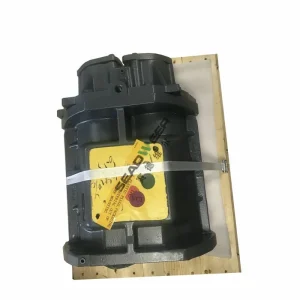
Lifting equipment rated for the full weight, a route walked in advance from delivery point to machine, and space to set the assembly down on its supports — never on a shaft end. The 1616734582 travels as one unit of 79 x 56 x 58 cm, so the lift is planned around the element rather than improvised on the day, and the 1616734582 arrives crated and ready for the lift the plan calls for.
Is the element serialized?
Yes. Each unit carries a serial number on the element plate, and that number links the physical assembly to its supply and documentation record. Keep the serial with the machine’s service file after installation, alongside the 1616734582 reference and the machine’s own nameplate details.




Ahmed Farouk –
We sent the element number from our parts records together with the compressor nameplate details, and the order came back routed to the correct service stage without any back-and-forth. The assembly arrived crated, serial plate intact, and our crew lifted it in during a planned stop with the workshop crane. The compressor went back on line holding its rated pressure, and the paperwork matched the part exactly.